
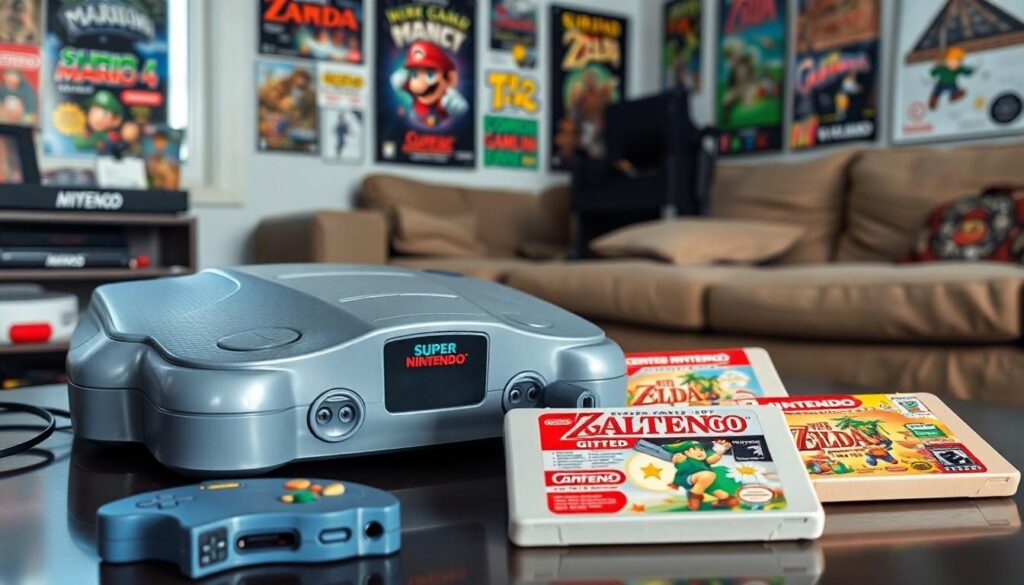
In the realm of gaming, few consoles have left as lasting a legacy as the Nintendo 64. Picture this: it’s the mid-’90s, and you’re about to embark on epic adventures with Mario, explore vast worlds in “The Legend of Zelda,” and challenge friends to intense battles in “Super Smash Bros.” But wait—when did this magical machine first grace living rooms and transform the gaming landscape forever?
The answer takes us back to 1996, a year that not only introduced the Nintendo 64 but also gifted us with unforgettable gaming experiences. As players eagerly unwrapped their consoles, they were met with groundbreaking 3D graphics and innovative gameplay. So grab your controllers and dust off those cartridges; it’s time to dive into the nostalgia of the Nintendo 64 and explore the impact it had on gaming history.
The History of Nintendo 64
In 1996, Nintendo released the Nintendo 64, marking a significant shift in the gaming landscape. This console introduced players to a world of 3D gaming, showcasing advancements that captivated audiences. Its unique hardware utilized 64-bit processing power, enhancing graphics and gameplay experiences compared to previous systems.
Launch titles established a strong foundation for the console’s success. “Super Mario 64” emerged as a revolutionary platformer, allowing players to explore expansive 3D environments. “The Legend of Zelda: Ocarina of Time” demonstrated storytelling and immersive gameplay, earning critical acclaim and numerous awards.
Nintendo 64 stood out with its four controller ports, promoting multiplayer gaming. Friends gathered for competitive play in iconic titles like “Mario Kart 64” and “GoldenEye 007.” These experiences fostered a communal gaming culture prevalent throughout the era.
The console’s cartridges, though less common than CD-based systems, offered faster load times and reliable performance. Players appreciated the absence of long loading sequences often found in other gaming formats.
Influential developers, including Rare and Nintendo’s internal teams, created memorable titles, further solidifying the console’s legacy. The Nintendo 64’s impact reverberated through the industry, shaping future gaming consoles and experiences.
Overall, the history of the Nintendo 64 illustrates a pivotal moment in gaming. Its combination of innovative technology, unforgettable games, and multiplayer experiences left a lasting impression on the gaming community.
What Year Did Nintendo 64 Come Out?

The Nintendo 64 debuted in 1996, marking a transformative period in gaming history.
Release Dates Around the World
Japan saw the Nintendo 64 launch first on June 23, 1996. North America followed with a release date of September 29, 1996. Europe experienced the console’s arrival later, on March 1, 1997. Each market responded enthusiastically, contributing to the console’s iconic status. Popularity surged, driven by the unique gaming experiences it offered, leading to impressive sales figures.
The Launch Timeline
Planning for the Nintendo 64 began years prior to its release. Development started in 1993, focusing on 3D graphics and multiplayer capabilities. By early 1996, anticipation grew as marketing campaigns teased upcoming titles. The official unveiling occurred at the Electronic Entertainment Expo (E3) in May 1996, generating excitement among gamers. Notably, the assortment of launch titles included “Super Mario 64” and “Pilotwings 64,” setting the stage for its success.
Impact on Gaming Industry
The Nintendo 64 significantly influenced the gaming landscape with its innovative technology. Its introduction marked a shift towards 3D gaming and multiplayer experiences, reshaping how players engaged with video games.
Innovations Introduced by Nintendo 64
Nintendo 64 pioneered the 3D graphics era, utilizing its 64-bit processing power. Enhanced rendering capabilities allowed for immersive environments in games like “Super Mario 64” and “The Legend of Zelda: Ocarina of Time.” The console supported four controller ports, encouraging multiplayer interactions, a significant evolution in social gaming. Moreover, the use of cartridges provided quicker load times than CD-based systems, maximizing player engagement. Innovations in analog control also improved precision, making game mechanics more dynamic and enjoyable.
Comparison with Previous Consoles
Comparing the Nintendo 64 to its predecessors highlights its advancements. Earlier consoles primarily relied on 2D graphics and limited multiplayer options. In contrast, the Nintendo 64 introduced a robust 3D world and accessible multiplayer capabilities. The shift from cartridges to disks in some competitors slowed loading, while the Nintendo 64 maintained speed with its cartridge system. Innovations in controller design also differentiated it from earlier models, offering intuitive gameplay experiences. Overall, the Nintendo 64 set new standards, influencing future console development significantly.
Legacy of Nintendo 64
The Nintendo 64’s influence on the gaming industry remains profound. Known for its pioneering use of 3D graphics, it showcased a marked evolution from 2D gaming. Iconic titles such as “Super Mario 64” and “The Legend of Zelda: Ocarina of Time” set new standards in gameplay and storytelling.
Multiplayer experiences became a staple, thanks to the console’s four controller ports. Games like “Mario Kart 64” and “GoldenEye 007” emphasized social and competitive play. Together, these titles fostered a communal gaming culture that resonated with players.
Innovations in gameplay mechanics further enhanced player engagement. The introduction of analog control allowed for more precise movements, revolutionizing how players interacted with virtual worlds. Cartridges permitted faster load times over CD-based systems, contributing to a seamless gaming experience.
In a comparative analysis, the Nintendo 64 outperformed earlier consoles in terms of graphics and multiplayer capabilities. Its 64-bit processing power enabled rich, immersive environments that captured players’ imaginations. The impact extended beyond gaming; influential developers credited the Nintendo 64 with shaping their future projects.
Market responses were overwhelmingly positive, with impressive sales figures following its launches in Japan, North America, and Europe. Anticipation built through marketing campaigns leading to its unveiling at E3 in May 1996 left a lasting mark on the industry. The legacy of the Nintendo 64 continues to inspire developers, influencing console design and gameplay mechanics today.
Conclusion
The Nintendo 64’s release marked a pivotal moment in gaming history. Its innovative technology and memorable titles created an experience that resonated with players around the world. The console not only introduced groundbreaking 3D graphics but also fostered a new era of multiplayer gaming that brought friends and families together.
With its impressive legacy, the Nintendo 64 continues to influence game design and console development. Its impact is felt in today’s gaming landscape, reminding players of the joy and excitement that defined a generation. The spirit of the Nintendo 64 lives on, inspiring both developers and gamers alike.

